Chromium is a trace mineral in everyday foods, and chromium picolinate is one of the forms used in supplements. This guide covers where chromium is found, how much adults need, what the NIH Office of Dietary Supplements says about safety and where it sits on the Sugar Reset label.

Editorial disclosure: sugar-reset.org is an independent guide and is not the manufacturer, distributor or seller of Sugar Reset. It contains affiliate links, and we may earn a commission if you purchase through them, at no extra cost to you. These statements have not been evaluated by the Food and Drug Administration. Sugar Reset is not intended to diagnose, treat, cure, or prevent any disease. Consult a healthcare professional before use.
Chromium is a mineral found in many foods. Chromium picolinate is one of the forms used in dietary supplements, alongside others such as chromium chloride. The NIH Office of Dietary Supplements says the body absorbs chromium in a similar way from these forms, and that researchers do not yet fully understand what chromium does in the body.
The chromium in food and supplements is trivalent chromium, which the NIH Office of Dietary Supplements describes as well tolerated. Hexavalent chromium, the industrial kind, "is toxic and not found in food or dietary supplements". Chromium picolinate is a trivalent form.
NIH ODS fact sheetThe NIH Office of Dietary Supplements lists these average daily recommended amounts, set in 2001, in micrograms (mcg):
| Men, 19 to 50 years | 35 mcg |
|---|---|
| Women, 19 to 50 years | 25 mcg |
| Men, 51 years and older | 30 mcg |
| Women, 51 years and older | 20 mcg |
Most people get chromium from the foods listed above. NIH ODS: Chromium
"Chromium from food and dietary supplements does not appear to cause any harm, but research is limited," the NIH Office of Dietary Supplements says. It adds that chromium supplements might interact with some medicines, including insulin, other medicines that lower blood sugar and levothyroxine. Anyone who takes medicine should check with a doctor first.
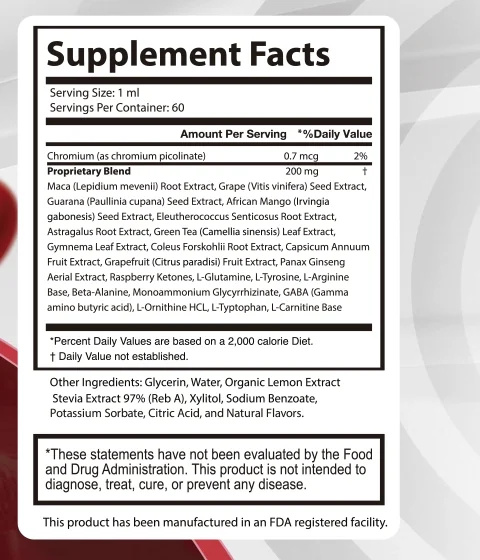
NIH ODS: Chromium"Chromium (as chromium picolinate)" is the first line of the Sugar Reset Supplement Facts panel: 0.7 mcg per 1 ml serving, which the label gives as 2% of the Daily Value. It is the only ingredient with its own printed amount; the other 22 share the 200 mg blend.
The sales page lists chromium picolinate first among the six ingredients it describes. The full label, with the other ingredients and their sources, is on the Sugar Reset ingredients page. To see the packs, use the Sugar Reset order page.
A form of the mineral chromium used in dietary supplements. The NIH Office of Dietary Supplements names it alongside chromium chloride and says the body absorbs chromium similarly from these forms.
The NIH Office of Dietary Supplements says chromium from food and supplements does not appear to cause harm, but research is limited, and that it might interact with some medicines. Check with a doctor first if you take medicine.
Meats, grain products, some vegetables and fruit, grape, orange and tomato juice, brewer's yeast and nuts, among others.
Average daily recommended amounts are 35 mcg for men and 25 mcg for women aged 19 to 50, and 30 mcg and 20 mcg from age 51.
No. Supplements and food contain trivalent chromium. Hexavalent chromium, used in industry, is toxic and not found in food or dietary supplements, according to the NIH Office of Dietary Supplements.
0.7 mcg of chromium, as chromium picolinate, per 1 ml serving: 2% of the Daily Value, as printed on the label.
Sugar Reset comes in packs of 2, 3 or 6 dropper bottles. The 3- and 6-bottle packs ship free, and the order page states a 60-day money-back guarantee. Step-by-step help is in the Sugar Reset buying guide.
Go to the Sugar Reset Order PageThis site uses Google Analytics cookies to count visits. See the privacy policy.